This is an excerpt from an introductory chapter entitled Gentlemen of the Republic.
The liberty of a democracy is not safe if the people tolerate the growth of private power to a point where it becomes stronger than the democratic state itself.
— Franklin D. Roosevelt, 1938
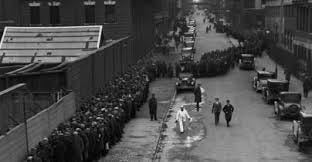
In the autumn of 1933, as breadlines stretched around city blocks and the embers of a broken economy still smoldered across the American continent, a different kind of fire was being kindled in the private dining rooms of Manhattan. It burned quietly — in the wood-paneled offices of J.P. Morgan & Co. on Broad Street, in the chateaux of the du Pont family along the Brandywine Creek, and in the hushed corridors of Sullivan & Cromwell, the most powerful law firm in the world. It was fed by fury, by fear, and by a conviction held with religious certainty: that Franklin Delano Roosevelt was destroying America.
This is the story of that fire, and of the men who lit it.
What would come to be known as the Business Plot — or, in the more clinical parlance of congressional investigators, the “White House Putsch” — was not the fantasy of paranoid radicals or the fever dream of demagogues. It was conceived by some of the most consequential financial minds of the twentieth century. It was financed with fortunes built over generations. And it came perilously close to becoming the most brazen act of political sabotage in American history.
The men who planned the coup needed more than money—they needed a name, a face, and half a million men.
To understand what these wealthy men attempted, and why, we must first understand who they were — not as cartoon villains, but as products of a specific American tradition: the belief that commerce was civilization, that the captains of industry were the true stewards of the republic, and that democratic politics, in the wrong hands, was an existential threat to the order they had built.
I. The Architecture of Power: America’s Financial Aristocracy in 1933
By the early 1930s, American capitalism had produced a concentration of wealth that would have seemed fantastical to the founders of the republic. A handful of families and financial institutions had come to exercise effective control over the commanding heights of the economy — the railroads, the steel mills, the chemical plants, the great investment banks.
At the apex of this system stood J.P. Morgan & Co. It was, in every meaningful sense, the most powerful private institution in the United States. Founded by Junius Spencer Morgan and brought to world dominance by his son John Pierpont Morgan — the elder, the imperious, the man whose very name had become synonymous with American finance — the house of Morgan operated less like a bank than like a sovereign state. It held seats on the boards of the nation’s largest corporations. It financed governments. In 1907, it single-handedly arrested a financial panic that threatened to bring down the American economy, doing what the federal government was either unable or unwilling to do
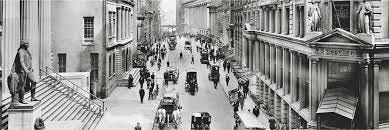
.The firm’s senior partner in 1933 was J.P. Morgan Jr. — known universally as “Jack” — who had inherited not only his father’s business but his worldview: that the great financial institutions of the country were the guardians of stability, and that their prerogatives were not to be trifled with by politicians, however popular. Jack Morgan was not a flamboyant man. He did not seek the spotlight. He preferred the company of fellow aristocrats, the rituals of the Episcopal Church, and the pleasures of his yacht, the Corsair. But beneath the patrician reserve burned a conviction that Roosevelt’s New Deal was socialism by another name — and that it had to be stopped.
Close beside the Morgans, in influence if not always in sympathy, stood the du Pont family of Delaware. The du Ponts built their dynasty on gunpowder, expanded it into chemicals, and by the 1920s had diversified into automobiles, paints, and a dozen other industries. Pierre S. du Pont and his brother Irénée were not merely rich in the way that successful businessmen are rich. They were dynastic rich, the kind of wealth that carries with it a sense of historical entitlement — a belief that the family’s fate and the nation’s fate were intertwined, and that what was good for du Pont was, by definition, good for America.
Irénée du Pont, the more political of the brothers, had grown increasingly alarmed by the labor movement, by taxation, and by what he perceived as the creeping influence of socialist ideology in Washington. He had helped fund political campaigns, supported conservative think tanks, and cultivated relationships with military men and politicians who shared his convictions. By 1933, he was looking for something more direct.
II. The Lawyers Who Ruled the World: Sullivan & Cromwell
No account of the Business Plot’s intellectual and legal infrastructure is complete without examining Sullivan & Cromwell, the Wall Street law firm that served, in effect, as the legal counsel of American capitalism itself. Founded in 1879, by 1933 the firm had become indispensable to the era’s great financial interests. It structured international bond deals. It navigated the complexities of the emerging regulatory state. It counseled corporations, governments, and billionaires with equal facility.
Its dominant personality was John Foster Dulles — tall, bespectacled, relentlessly ambitious — who would later serve as Secretary of State under Eisenhower, but, in 1933 was already one of the most influential lawyers in the country. Dulles’s client list read like a roster of American industrial power: J.P. Morgan, Kuhn Loeb & Co., the great utilities, the railroads. His brother, Allen — more charming, more worldly, and eventually the first civilian director of the CIA — was also a partner at the firm, and shared John Foster’s conviction that the New Deal represented a dangerous disruption of the natural order of things.
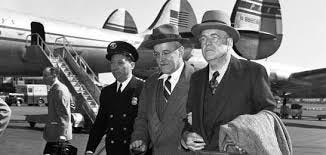
Sullivan & Cromwell was not merely a law firm. It was a nexus — a place where information, money, and influence converged, where the men who controlled the economy could coordinate their responses to political threats without the messiness of public politics. Its very opacity was a feature, not a bug. When men of great wealth wished to act in concert, they did so through their lawyers.
The Dulles brothers occupied a peculiar position in the emerging conservative counter-movement against the New Deal. They were not crude ideologues, like some of the era’s right-wing firebrands. They were sophisticated operators who deeply believed in the primacy of corporate prerogatives and had spent their careers perfecting the art of making power invisible. Their role in what would follow was less that of conspirators than of enablers — men who created the conditions in which a plot could be conceived, funded, and organized.
III. The Crash and Its Discontents: How 1929 Broke the Old Consensus
To understand the desperation that animated the Business Plot, one must sit for a moment with the wreckage of October 1929. The Great Crash was not merely an economic event. It was a civilizational shock — a revelation that the system these men had built, and in which they had placed absolute faith, was capable of catastrophic, self-generated failure.
Between 1929 and 1933, the United States lost roughly a third of its gross national product.[1] Unemployment, which had stood at around 3% percent in 1929, reached nearly 25% percent by 1933.[2] Thousands of banks failed.[3] Millions of families lost their savings, their homes, their farms. The great edifice of American prosperity that the financial class had celebrated throughout the roaring twenties had collapsed with startling speed, and the rubble had buried ordinary Americans by the millions.
For the men of Wall Street, the crash presented a double crisis. The first was financial: the destruction of enormous paper fortunes, the collapse of credit, the sudden illiquidity of markets that had seemed inexhaustible. The second was political: the crash had dealt a devastating blow to financial class prestige. The banker, who had been lionized through the twenties as a figure of almost scientific competence, suddenly appeared in a different light — as a gambler, a speculator, a reckless steward of other people’s money.
The congressional hearings conducted by Ferdinand Pecora between 1932 and 1934 deepened this legitimacy crisis. Pecora, a tenacious former assistant district attorney from Manhattan, dragged the great men of finance before the Senate Banking Committee and subjected them to the kind of withering examination they had never before been asked to endure in public. J.P. Morgan Jr. was revealed to have paid no federal income taxes in 1931 and 1932.[4] Charles Mitchell of National City Bank was shown to have sold stock to members of his own family to generate artificial losses.[5] Albert Wiggin of Chase National Bank had shorted his own bank’s stock during the crash, profiting from the disaster he had helped create.[6]
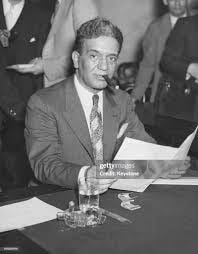
The Pecora hearings did not merely damage reputations. They shattered the mythology that had sustained the power of the financial class — the myth of superior knowledge, superior judgment, and irreplaceable competence. If these men were not the wise stewards of the economy they claimed to be, then the entire justification for their privileges was called into question. Into this vacuum of legitimacy stepped Franklin Roosevelt.
IV. The Enemy in the White House: Roosevelt and the New Deal Threat
Franklin Delano Roosevelt was, by birth and temperament, one of their own. He was a Hudson Valley patrician, educated at Groton and Harvard, a man who summered at Campobello and sailed as naturally as he breathed. The men of Wall Street had known him, or known of him, all their lives. Some had patronized him, in both senses of the word — political contributions, social courtesies, the easy condescension that the truly rich reserve for the merely well-born.
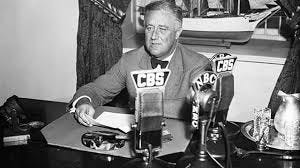
This made his betrayal — as they experienced it — all the more complete.
From the moment Roosevelt took office in March 1933, he moved with extraordinary speed to reshape the relationship between the federal government and the economy.
American history shows that when elites believe the political order is slipping beyond their control, the temptation to seek extra-institutional remedies—whether through legal engineering, mass mobilization, or even direct action—returns.[7] The Business Plot was one such episode; the events of January 6, though different in origin and execution, reflect the same underlying anxiety about the durability of democratic outcomes.
The Emergency Banking Act, the Glass-Steagall Act separating commercial and investment banking, the creation of the Securities and Exchange Commission, the Agricultural Adjustment Act, and the National Industrial Recovery Act — the legislation poured out of Congress in a torrent. Each act represented, in the eyes of the financial class, another incursion of government into territory that had been theirs by right and custom.
What enraged them most was not any single piece of legislation but the spirit behind it — the implicit assertion that the economy was a public matter, subject to democratic accountability, rather than a private preserve managed by experts of superior competence and breeding. Roosevelt spoke in language that made their blood run cold: of “money changers” driven from the temple, of the need to put national interest above “narrow private interest,” of the rights of workers and farmers alongside — sometimes above — the prerogatives of capital.
Irénée du Pont wrote to a friend in 1934 that Roosevelt’s program was taking America toward a form of government that bore alarming resemblance to fascism or communism[8] — the two great totalitarian threats of the era—and fearing the administration’s centralized executive authority, systematic economic planning, and its erosion of constitutional limits. It was a charge that would be leveled repeatedly in the years ahead, always with apparent sincerity, always with the same failure to acknowledge the irony that the plotters themselves were contemplating a form of government that bore a rather more specific resemblance to European fascism.
By the autumn of 1933, financial class discontent had curdled from grumbling into something more purposeful. Money was moving. Conversations were being had. And a particular man — charming, decorated, and apparently willing — had begun to attract their attention.