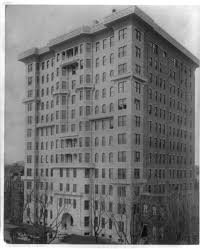
For more than a century, Washington, D.C. has been a city that refuses to look up. The Height of Buildings Act of 1910—prompted by the 1894 Cairo apartment building that locals found alarmingly tall—generally limits structures to the width of the street they face plus twenty feet, capping out around 130 feet on commercial corridors and 90 feet on residential streets. The result is the District’s signature horizontal skyline, a deliberate civic choice meant to keep monuments, not money or spectacle, as the things that rise highest.
That tradition is what makes the latest addition to the South Lawn so jarring. Crews are now assembling a temporary octagon arena for “UFC Freedom 250,” a roughly $60 million mixed martial arts event scheduled for June 14—Trump’s 80th birthday and a marquee date in the nation’s 250th-anniversary celebrations. The setup includes a domed, star-spangled arch and thousands of temporary seats, and early renderings show the framework looming over the neoclassical White House like a roller coaster dropped behind a museum. Trump himself has boasted it is the most anticipated event he’s ever been involved with, staged “right at the front door.”
For context, even the largest temporary structures historically erected on the lawn have been event tents and pavilions—used for state dinners, weddings (like Tricia Nixon’s 1971 Rose Garden wedding), and large receptions. These can be sizable but are generally not larger than the ~55,000 sq ft White House.
During World War II and other periods, various temporary buildings and offices were placed on the grounds, but these were modest.
The Eisenhower-era and later renovations involved cranes and scaffolding, and the 1948–1952 Truman reconstruction was a massive project—but that work was on the building itself, not a separate larger structure on the lawn.
The optics are the point, and they invert everything the capital’s design philosophy stands for. Washington’s restraint has always carried a message: the institutions and ideals of the republic should tower over any single person or amusement. Even the city’s beloved monuments have had to negotiate that humility.
When the Martin Luther King Jr. Memorial was built, its 30-foot centerpiece far exceeded the customary 19.5-foot ceiling associated with statuary in the city—a limit tied in local lore to the Statue of Freedom atop the Capitol. The King figure ultimately cleared review in part because it was classified as a relief rather than a freestanding statue, yet not before the Commission of Fine Arts initially called it too “confrontational.” The lesson of that saga is how seriously Washington scrutinizes anything that rises above its neighbors—even a monument to a national hero.
Heather Cox Richardson recently observed how the UFC cage frames the White House when viewed through a camera lens. This sentiment appropriately encapsulates the Trump administration’s priorities—preplanned celebrity optics over Washington stature, and personal glory over the civic and historical character the capital was built to protect.
Against that backdrop, a fight cage that dwarfs the White House isn’t a quirky birthday flourish. It’s a statement about what now gets to stand grandest in the capital: not the building that symbolizes the office, but a branded spectacle staged for the man who occupies it.