Bridging the gap between watchdog and academic science.
Agriculture schools bridge the gap.
When Zach Lahn won Iowa’s Republican gubernatorial primary, he said we have to find out what Big Ag knew about the safety of their products and when they knew it — and that we need to direct our great state universities to use every resource they have to fight Iowa’s cancer epidemic.
That second half is worth dwelling on. When a candidate wants to turn the universities loose on the hard questions, he is pointing at an institution most people have stopped thinking about: the land-grant agricultural college.
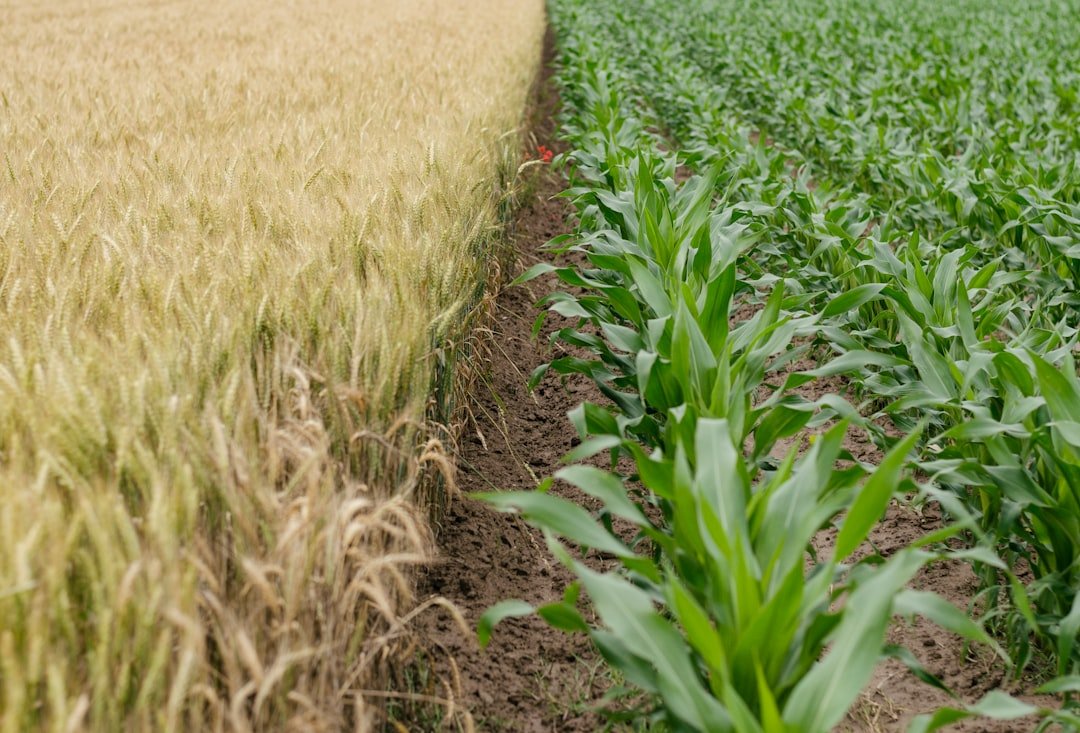
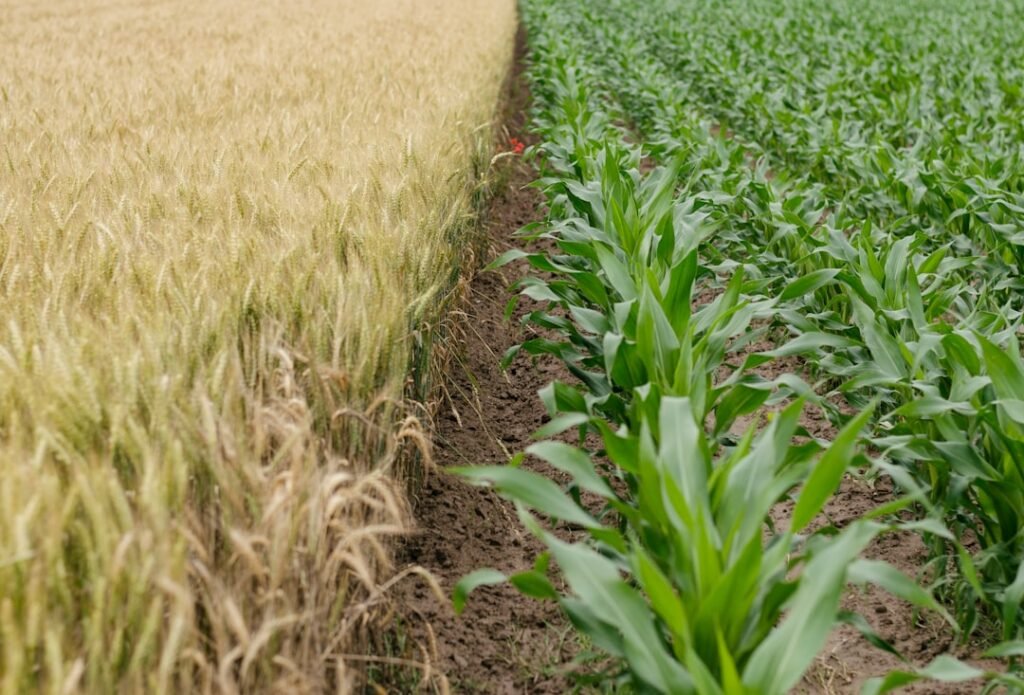
These are the schools that breed better seeds, teach the next generation of growers, and send extension agents to every county to answer a farmer’s call for free. Quietly, they are the lifeline of the small farmer.
The trouble is that we have spent decades hollowing out the very institutions we now want as our watchdogs. Before we ask our ag schools to hold industry accountable, we owe it to them to understand the bind they are in — and to do something about it.
A system built for the public, now leaning on private money
The land-grant system was a radical idea. The Morrill Act of 1862 and the Hatch Act of 1887 set up universities and experiment stations whose entire reason for existing was to serve the ordinary farmer rather than a corporation. For most of the twentieth century, that public mission was backed by public dollars.
That balance has shifted dramatically. Across all U.S. agricultural research and development, the public share of funding fell from roughly half between 1970 and 2008 to under 30 percent by 2014. Public spending peaked around 2002 and, in inflation-adjusted terms, has since fallen by about a third — leaving total public funding near where it stood in 1970, despite half a century of rising costs.
When public money thins out, something fills the gap, and increasingly that something is private industry. National Academies’ analyses have long flagged the same trend: private funds have grown faster than federal or state support and now shape not just how much research gets done but which questions get asked.
None of this happened because agriculture schools sold out. It happened because we stopped paying the bill, and the schools found money where money existed. Funding is now funneled to microbiome, precision breeding, and genomics projects.
What the federal lifeline actually looks like
The largest traditional source of agricultural research support has long been the Hatch Act formula funds, distributed through the USDA to experiment stations in every state and matched by the states. The program still channels well over $250 million a year to land-grant research, allocated by each state’s rural and farming population. For decades it has been the closest thing to a stable floor under the whole system.
Lahn’s call to direct “every resource” at public health runs into a sobering reality: those formula funds have been shrinking as a share of the typical researcher’s budget for years, and they are now a target for further cuts.
The proposed 2027 federal budget would pare back these block grants, dismissing some university work as wasteful “pet projects.” Whatever one thinks of any single study, cutting the formula funds does not make agriculture schools more independent. It makes them lean harder on the one partner that never runs out of money: industry.
The same is true of grant money that flows through USDA agencies, including APHIS — the Animal and Plant Health Inspection Service — which funds work on pests, plant disease, and animal health that no single grower could tackle alone. This is exactly the public-good research the market will never fund on its own, because there is no product to sell at the end of it. It is also the funding most exposed when budgets tighten, because it has no corporate constituency to protect it.
That is the structural vulnerability in a sentence: the most public-spirited research has the weakest backing, and the most commercially useful research comes with strings.
The schools have already been the watchdogs — at real cost
Here is the part that should give everyone hope. Even inside this squeeze, land-grant scientists have done exactly what Lahn is calling for — studying the products coming off the industry line and reporting honestly when those products caused harm.
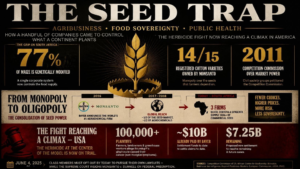
The clearest example is dicamba. When dicamba-tolerant soybean systems arrived in 2016, the herbicide began drifting off-target and damaging neighboring crops across millions of acres, and it was university researchers, not the manufacturers, who documented the scale of it. University of Tennessee Institute of Agriculture scientists showed that mixing glyphosate with dicamba formulations consistently dropped the spray solution’s pH below the level the labels themselves called safe.
More recently, a University of Illinois team built drone-based sensing that detects dicamba injury at one ten-thousandth of the label rate, eight days after exposure — an independent way to verify damage rather than relying on the manufacturer’s word. And a unique, rare opportunity to do good without irking the powers that be.
The personal cost shows how exposed these scientists are. Soybean breeders at several universities watched their own experimental plots ruined by drifting dicamba — research into disease resistance and drought tolerance, destroyed by a product they were trying to study. And academics who take public stances on the health or environmental effects of powerful industries have found themselves sidelined for doing so.
The watchdog instinct is alive and well in our ag schools. It survives despite the funding model, not because of it. Imagine what it could do with that model on its side.
What empowering the schools would mean
If the goal is to find out what industry knew and when — and to point our universities at Iowa’s health crisis — the most concrete pro-farmer thing a state can do is rebuild the independent capacity of its land-grant institutions:
Restore the public floor. Protecting and growing Hatch formula funds, USDA competitive grants, and public-good programs like those run through APHIS is the difference between a scientist who can follow the evidence and one who has to follow the money.
Fund the questions the market won’t. No company will pay a university to investigate whether its own product causes harm. That research is a public good, and it has to be paid for with public dollars if it is going to happen at all.
Protect the people who tell the truth. Strong conflict-of-interest policies and real academic-freedom protections let a scientist publish an inconvenient finding without fear of losing a grant, a lab, or a job.
Reinvest in extension. The county extension agent is the small farmer’s direct line to the university — and how independent science actually reaches the people who need it most.
The bottom line
It is easy to be cynical about institutions that have grown cordial with the industries they study. But cordiality is what happens when you defund the public side of a partnership and leave only the private side standing.
The land-grant colleges understand the small farmer. They are the bridge to transparency and the purveyors of ultimate good in ag.
We cannot stop funding the part of them that serves the small farmer, then act surprised when industry filled the vacuum.
The encouraging truth is that the foundation is still there. The scientists are still doing the work — on dicamba, on drift, on the questions nobody else will touch — often at real personal risk. They do not need to be torn down or treated as suspects. They need to be re-funded, protected, and trusted to do the job they were created to do more than 160 years ago.
Lahn is right that our great universities should use every resource at their disposal to confront Iowa’s health crisis. The fastest way to make that happen is to give those resources back. Empower ag schools today.
I implore visible leaders spreading content on this issue, like The MAHA Report and Zach Lahn, to push for more ag school funding. These schools are working constantly and are more productive than most other schools and departments. They are trusted, and rightfully so.